





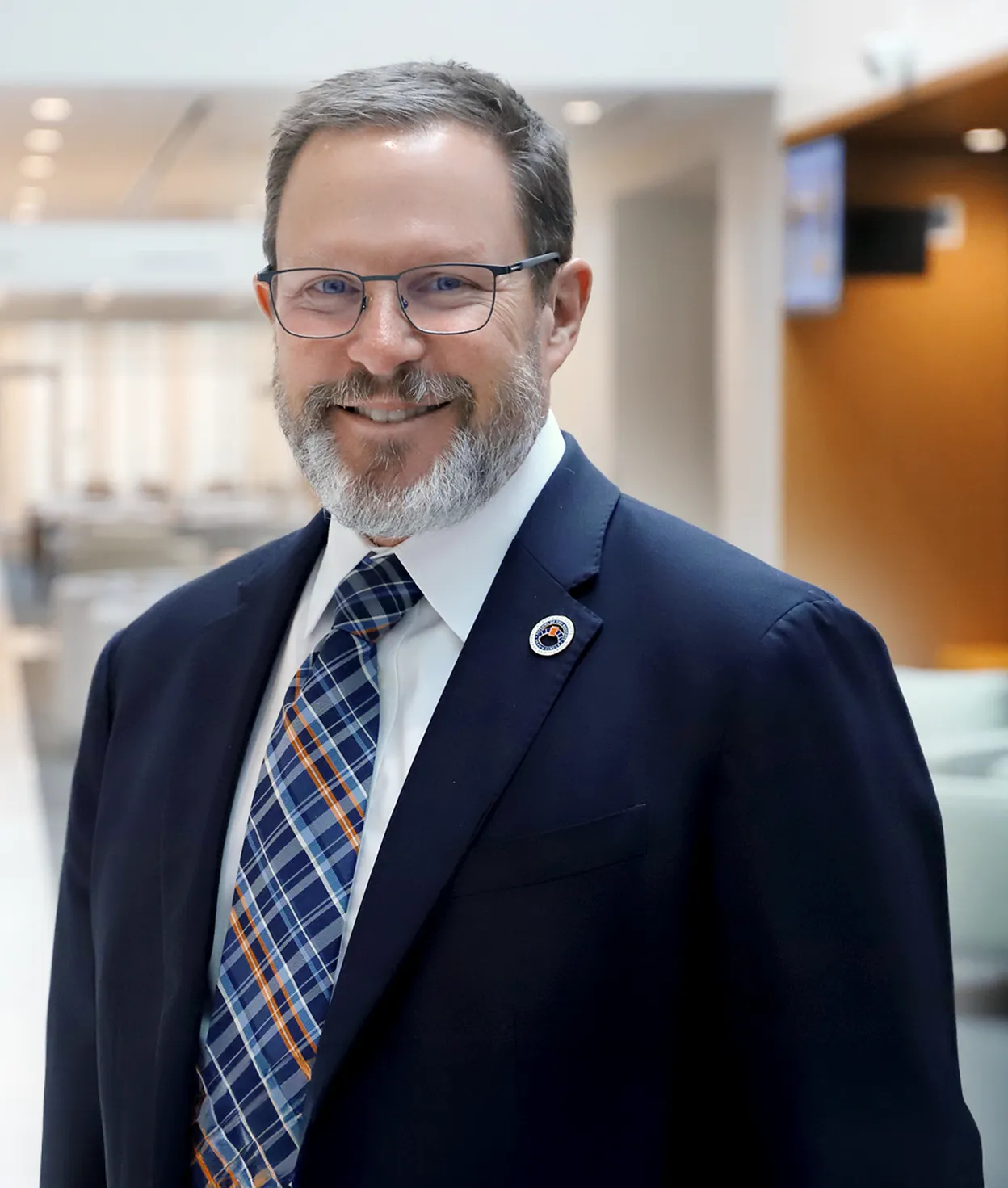
FROM THE DEAN
This year’s theme is AI in Education, reflecting how our college is embracing Artificial Intelligence to advance research, enrich teaching and enhance learning experiences. Across our four units, faculty are leveraging AI to prepare future educators and healthcare professionals for careers where technology and humanity work hand in hand.
By integrating AI thoughtfully and ethically, we are not only adapting to change — we are opening an important door to opportunity. These efforts position us as a leader in innovative thinking, working together to meet society’s education and health challenges today and far into the future. From AI-driven innovations in teacher preparation, agriscience education, counselor education, health research and more, our work ensures graduates are ready to lead in a world where AI amplifies human potential.
In this edition, we also feature how our college is leading Academic Impact and Advancing Innovation and Outreach. These dimensions underscore our commitment to shaping scholarship and driving transformative ideas that strengthen our core values while expanding possibilities for all. I invite you to explore the stories in this issue and see how Auburn’s College of Education is shaping an AI-powered future that blends innovation with purpose.
Cover Story
AI in Education
As Artificial Intelligence (AI) becomes more integrated into daily life, Auburn University’s College of Education is sharpening its focus on this powerful tool and exploring how it can strengthen the preparation of future educators and healthcare workers.
Auburn College of Education Dean Jeffrey Fairbrother shared his perspective on how artificial intelligence aligns with the college’s vision for the future.
Contents
Table of Contents
Academic Impact
Agents of Impact
AI in the Field
Building an Impact
Alumni Inspiration
Advancing Innovation & Outreach
Groundbreaking Program
Activating AI
Amplifying Outreach
AI for Education
Academic Impact
An Equation of Passion Plus Purpose
Abigail Coopwood had always been drawn to mathematics, but it wasn’t until she entered Auburn’s College of Education that she discovered how deeply she wanted to share that passion with others.
That desire to help students discover their own strengths has guided Coopwood throughout her time at Auburn. And in return, she said, the College of Education has given her the support, mentorship and hands-on experience she needed to grow into the teacher she hopes to become.
Opening Doors, Expanding Possibilities
Before she ever stepped into a classroom at Auburn University’s College of Education, Danny Dore was already thinking about the future, of counseling, of technology and of the communities she hoped to serve.
“We’re looking at how AI is helping out with the future,” Dore said. “So, we’re looking at VR counselors, rehabilitation counselors, and what they think about AI and their perspectives.”
Purpose in Motion

When Bella Helm was in third grade, she watched her mother navigate the exhausting realities of multiple sclerosis. The world around them couldn’t see the disease, but Helm watched every moment of her mother pushing through long workdays and full-time parenting.
“Just seeing her adapt to daily life with this new disease that most people couldn’t see on the outside…I saw it at home when she was fatigued from a long day of work and being a full-time mom, and that just really inspired me to continue that forward in the future and in my career,” Helm said. “I wanted to help people just like her.”
Becoming a Thought Leader
At a moment when conversations about Artificial Intelligence are reshaping classrooms across the country, Glory Williams is positioning herself at the center of the movement. As a doctoral student of Educational Leadership in Auburn’s College of Education, she’s not just studying the future, she’s helping define it.
Williams approaches AI neither as a threat nor a miracle solution, but as a tool whose impact depends on the people who shape it.
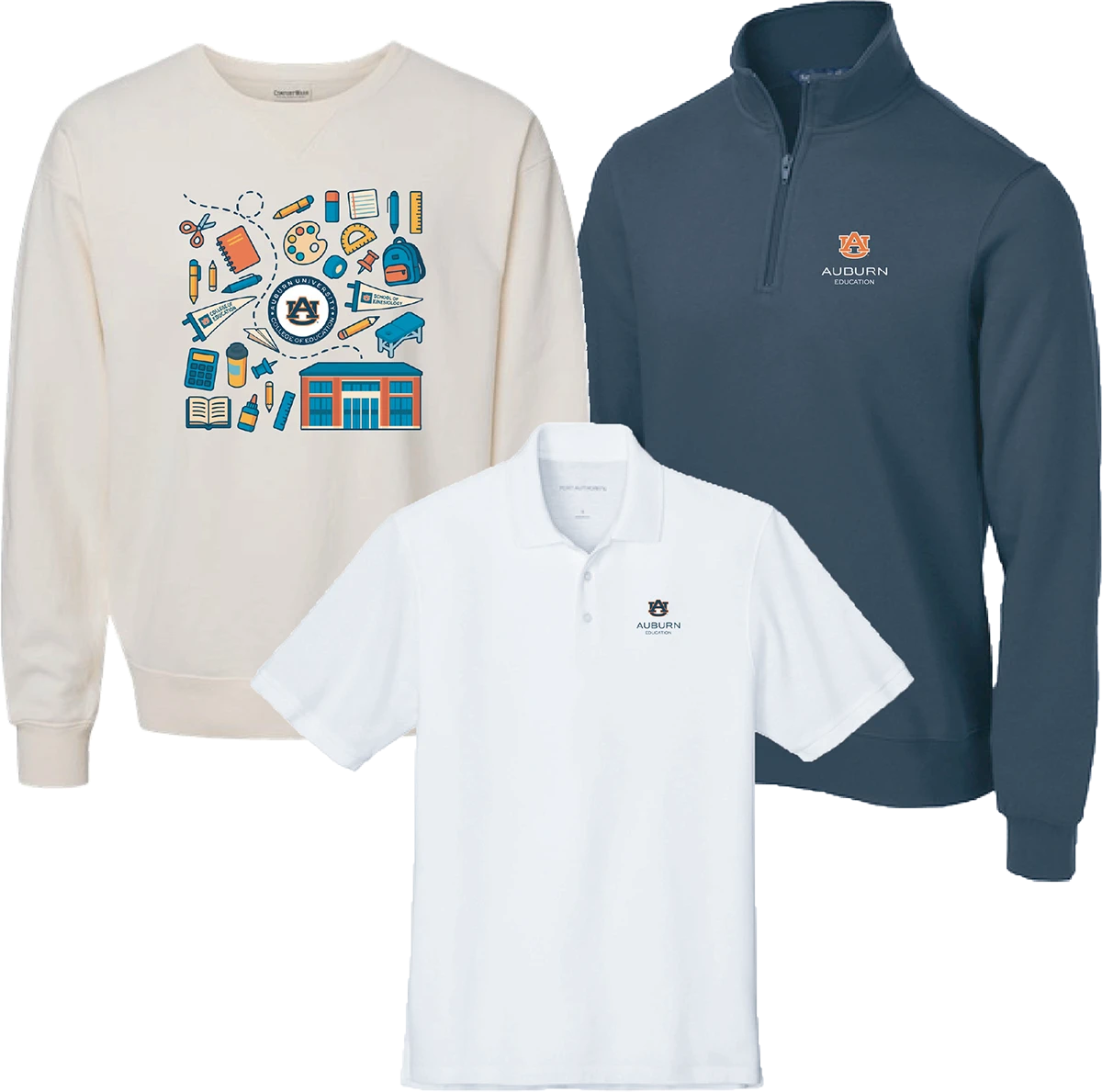
Offerings include College of Education designs as well as those for our School of Kinesiology.

Academic Impact
Cultivating AI in the Field of Agriculture
Artificial intelligence is no longer a future concept in agriculture. It is already shaping how food is grown, how data is analyzed and how the next generation of agricultural leaders is trained.
The AI Future of Rehab Counseling
When students in the Clinical Rehabilitation Counseling program of Auburn’s College of Education walk into class these days, they’re just as likely to open an AI interface as they are a traditional resource workbook.
The Sensorimotor and Rehabilitation (SMART) Neuroscience Lab in the School of Kinesiology studies the neuroscience of human movement using virtual and augmented reality simulations.
Circuit is what’s called a quadruped robot (“robot dog”), and he’s used to explore new ways of supporting older adults’ safety at home.
Where Research Meets the Future

Artificial intelligence is transforming nearly every sector of society, and Auburn University’s College of Education is making sure its graduates are prepared not just to adapt to that change, but to shape it.
Academic Impact
Building Relationships
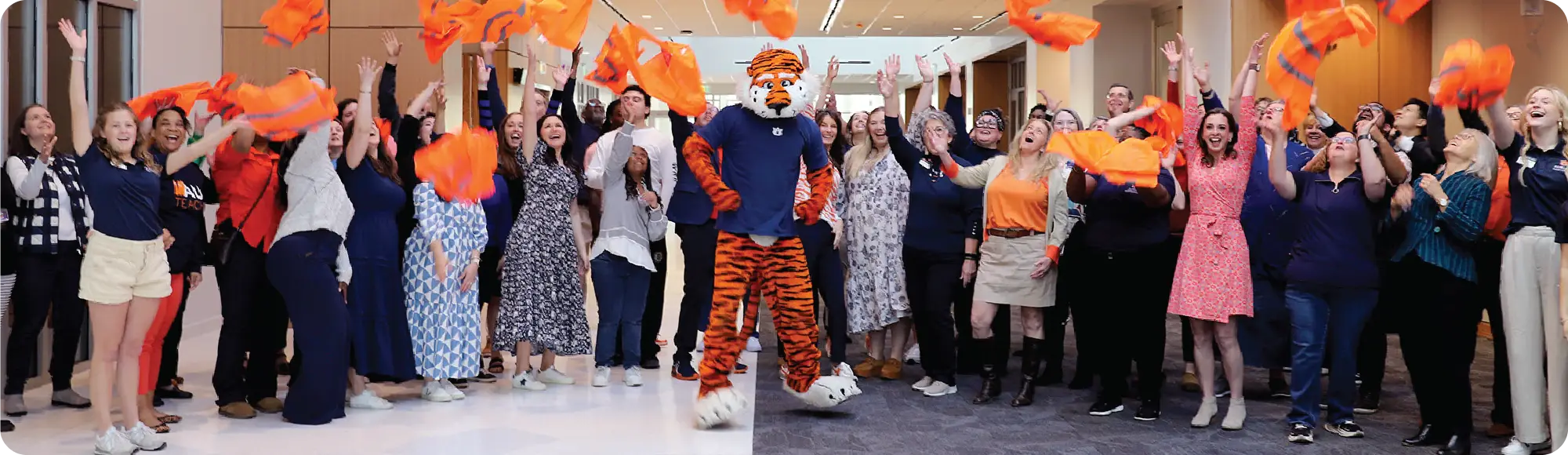
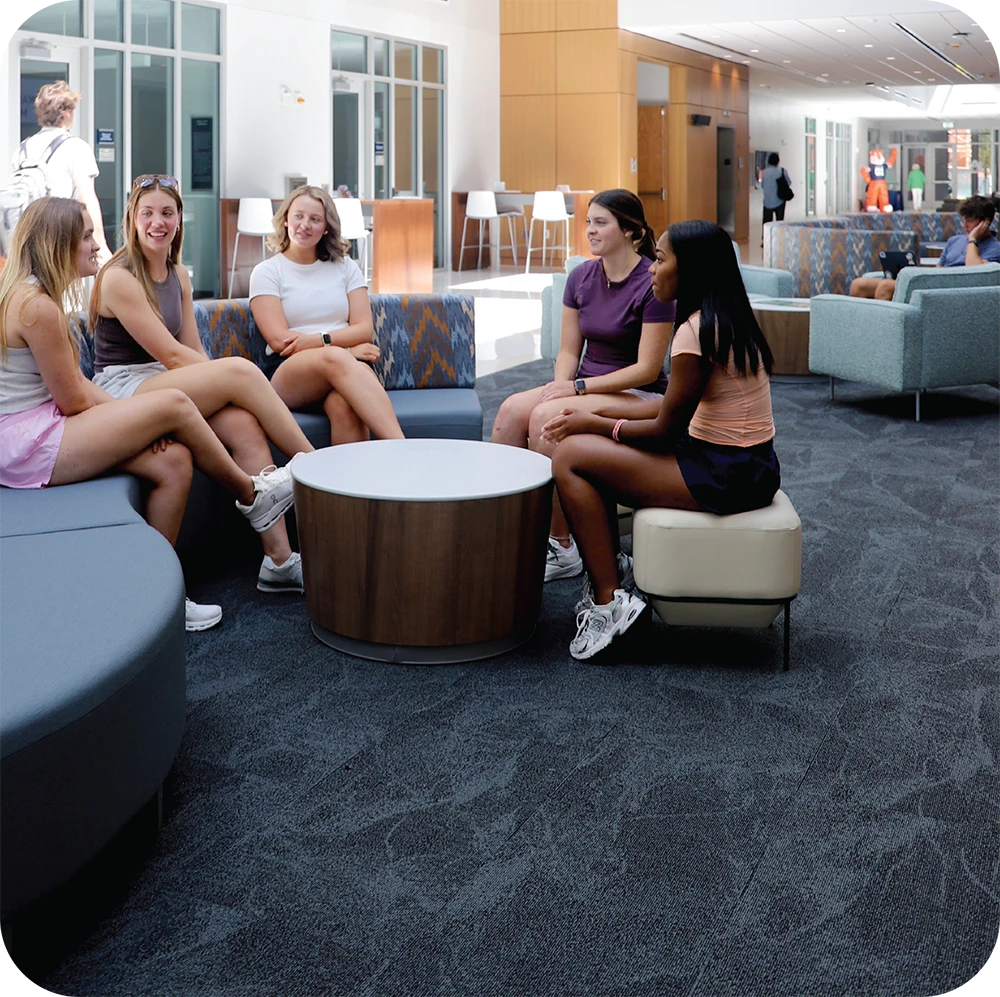
In 2025, Auburn University’s College of Education began a new era with the opening of its own building focused on collaboration and innovation.
In the months since its August ribbon cutting, the 167,000-square-foot facility at the corner of Samford Avenue and Duncan Drive has become much more than a collection of classrooms, labs and meeting spaces.
It has given the college a distinct, unified identity.
Academic Impact

Auburn University’s College of Education has long been a home to those committed to building a better future for all. Across classrooms, districts, global communities, research labs and even microgravity environments, the College of Education’s alumni continue to embody Auburn values — proving that the impact of an Auburn College of Education degree reaches far beyond the Plains. Just ask the following alumni.
Limitless Learning
When Megan Tucker boarded the ZeroG aircraft for a microgravity research flight, she didn’t just complete an educator’s dream — she, in a sense, brought her students along with her. Through the Space for Teachers program, Tucker conducted international student-designed experiments on brine shrimp and paper helicopters 35,000 feet above Earth.
Advancing Innovation & Outreach
As the first cohort of Doctor of Physical Therapy students approach the end of their first year, students are preparing for the next big step in their journey: clinical rotations.
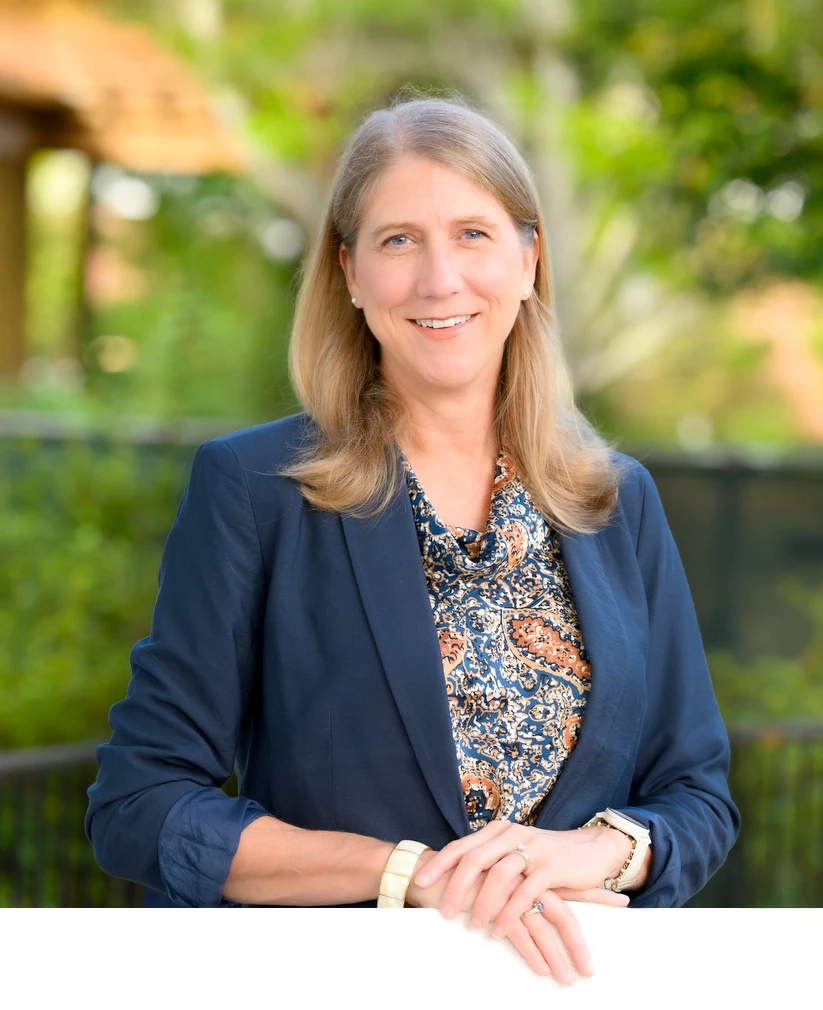
New physical therapy program administrator looks to the future
he Doctor of Physical Therapy program in the School of Kinesiology kicked off 2026 with a new face: Susie Trammell, academic program administrator. Trammell joined the PT program after serving as a student services coordinator with Auburn University’s Pathway and Transfer Center in the Office of the Registrar. Her experience advising an average of 375 students per semester and her institutional knowledge of the university made her a natural fit for the physical therapy program.
“Our program, which is dynamically evolving as we grow, requires initiative, adaptability, and strong organizational skills, and Susie brings those qualities to our team,” he said. “Equally notable is her ability to connect authentically with students, families, and colleagues—bringing empathy, clear communication, and a positive, solutions-oriented perspective that strengthens team culture and enhances the overall student experience.”
Advancing Innovation & Outreach
Opening Doors, Expanding Possibilities
Exercise and fitness performance might appear to be one of a few aspects of life that have not been touched by artificial intelligence. After all, there’s no shortcut to proper exercise. However, graduate students in the School of Kinesiology’s Exercise Assessment, Prescription and Programming class are using AI to evaluate health and fitness data, and assess whether AI-generated exercise programs are actually of benefit to the people who would be using them.
Counseling in the Age of AI
The next generation of school counselors at Auburn University’s College of Education is learning to navigate a counseling landscape transformed by artificial intelligence, and they’re doing it through coursework that places ethics, critical thinking and human connection at the forefront.
“Preparing future school counselors to know about AI and emerging technologies is an essential component to ensuring they are ready to be in the school setting and workforce,” said Tuttle, coordinator of the college’s School Counseling Program.
Tools for Teachers
For Megan Burton, a professor of Elementary Education in Auburn’s College of Education, the integration of artificial intelligence into higher education revolves around the concept of collaboration between the teacher and the tool.
Leading the AI Charge
Artificial intelligence is reshaping every corner of education — from how researchers collaborate to how institutions craft policy to how classrooms evolve. At Auburn University’s College of Education, faculty members in the Department of Educational Foundations, Leadership, and Technology are helping define what responsible, forward-thinking AI leadership looks like across the state, region and nation.

Advancing Innovation & Outreach
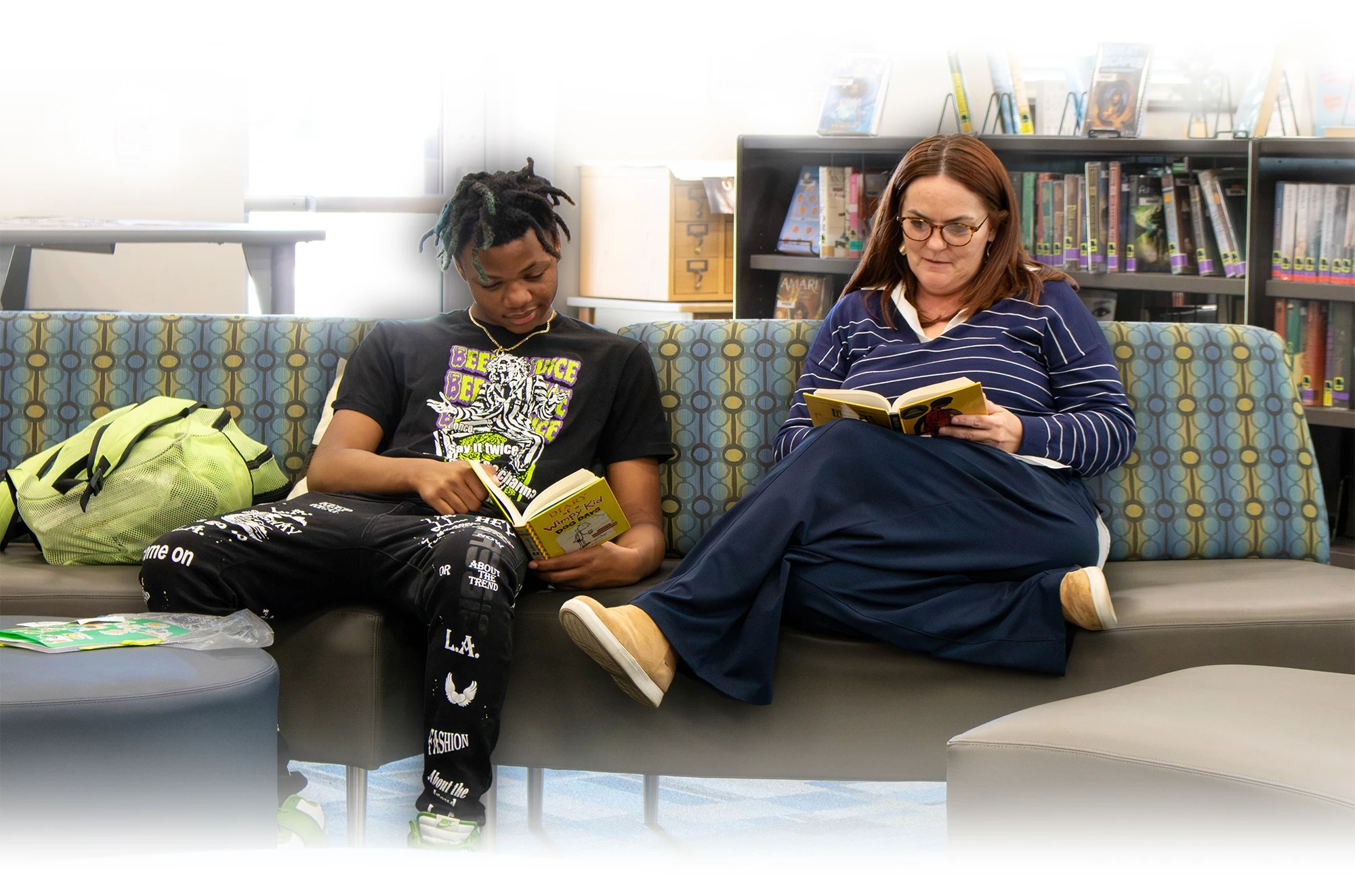
Like many students his age, Ke’Zerrious Powell often let anxiety keep him from speaking up in class. Through a new literacy partnership between Auburn University’s College of Education and Beauregard High School, though, the ninth grader is stepping forward – gaining confidence, building connections, all while helping future educators in turn.

Mental Health Momentum
What began as a shared commitment to listening and learning quickly grew into a meaningful community experience last fall, as Auburn University’s College of Education introduced Community Conversations on Mental Health. Designed to open the door for candid discussions around mental health in rural Alabama, the series brought Tallapoosa County residents, community leaders and university partners together for four months of conversation, connection and practical guidance at Central Alabama Community College.
Principled Mentoring
On her first day as principal of Reeltown Elementary School, Kathryn Conradson stood in the quiet morning halls and felt the weight of new leadership. She had the credentials — four degrees from Auburn University’s College of Education, including a doctorate in school leadership — and years of classroom and administrative experience. But what she didn’t expect was how transformative it would be to also have someone walking alongside her.
Auburn alum training Boston Red Sox pitchers

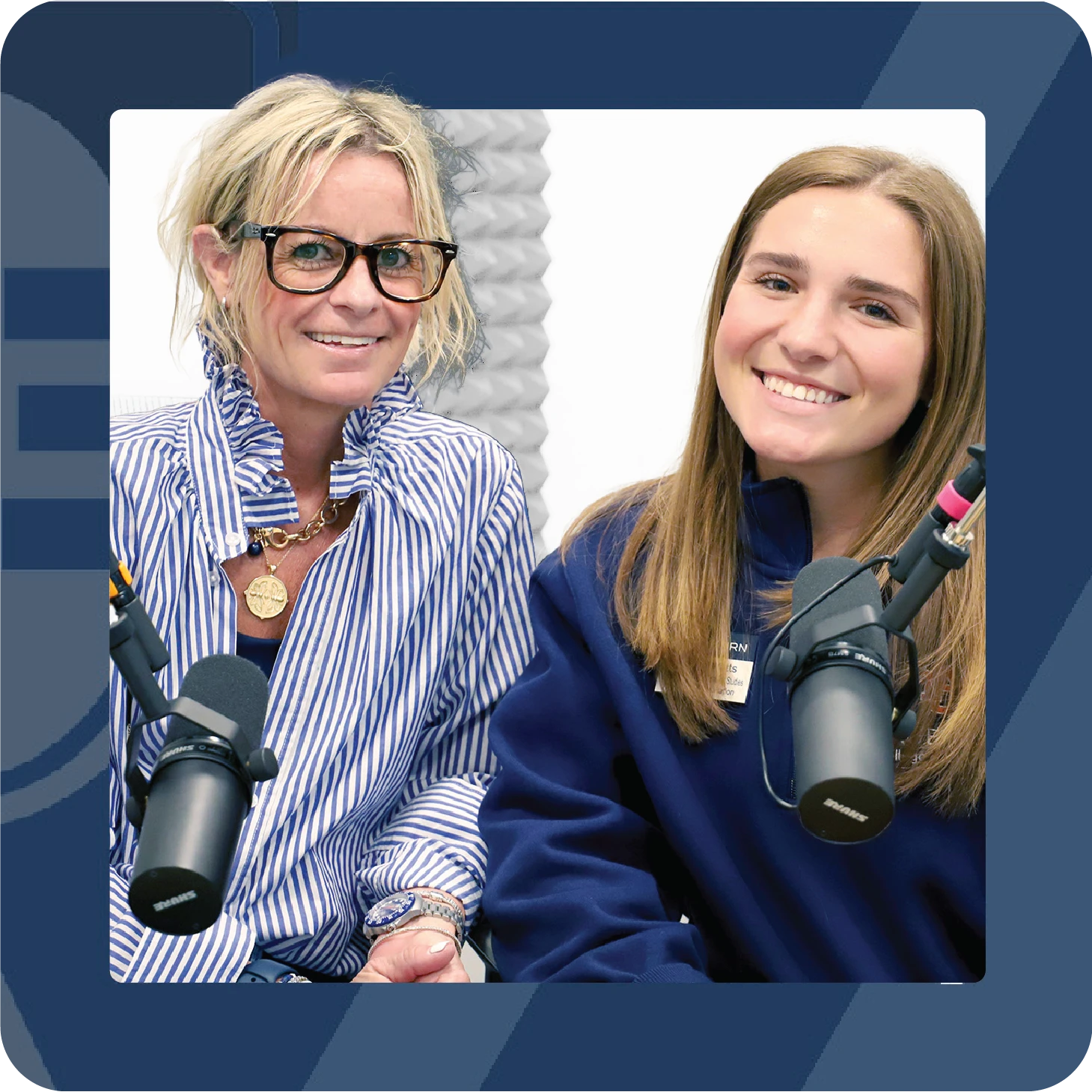
What do a biomechanist and a pageant queen have in common? More than you might think.


Advancing Innovation & Outreach

OP-ED:
AI Literacy: The Career Skill You Need to Start Building Now
AI Literacy: The Career Skill You Need to Start Building Now
If you’re graduating in the next few years, there’s something your professors might not be telling you. Employers are evaluating candidates based on a skill most schools haven’t prepared you for: AI literacy.

Jeffrey T. Fairbrother
Preston Sparks
Mary Kate Hughes
Miranda Nobles
Preston Sparks
Mary Kate Hughes
Miranda Nobles
Austin Scott
Jared Long
Austin Scott
Jared Long
Preston Sparks
Christopher Clemmons
ChatGPT and Adobe Firefly were used as aids for certain components of this magazine.