

Academic Impact
Where Research Meets the Future

Artificial intelligence is transforming nearly every sector of society, and Auburn University’s College of Education is making sure its graduates are prepared not just to adapt to that change, but to shape it.
ERMA provides research methods, measurement and evaluation education for professionals preparing to work in school systems, institutional research offices and community organizations. That mission has only grown more relevant as educational environments increasingly rely on digital tools, data systems and AI-enhanced platforms. Students develop the competencies needed to conduct applied research and evaluation in real educational and community settings, skills that are now deeply intertwined with AIdriven tools and analytics.
A curriculum ready for an AI-powered world
ERMA’s coursework builds the analytical foundation required to understand and apply AI in educational contexts. Classes such as Applied Quantitative Data Analysis, Basic Methods in Education Research and Design and Analysis equip students to work with complex datasets and evaluate emerging technologies. The program’s core focus areas, research methodology, measurement, program evaluation, statistics and assessment, align naturally with the rise of AIenhanced learning analytics and automated assessment systems.
This emphasis on methodological fluency ensures that graduates are prepared not just to use AI tools, but to understand how they work, how they should be evaluated and how they can be responsibly integrated into educational settings. The result is a graduate experience that positions students at the forefront of data-driven decision-making in modern education.
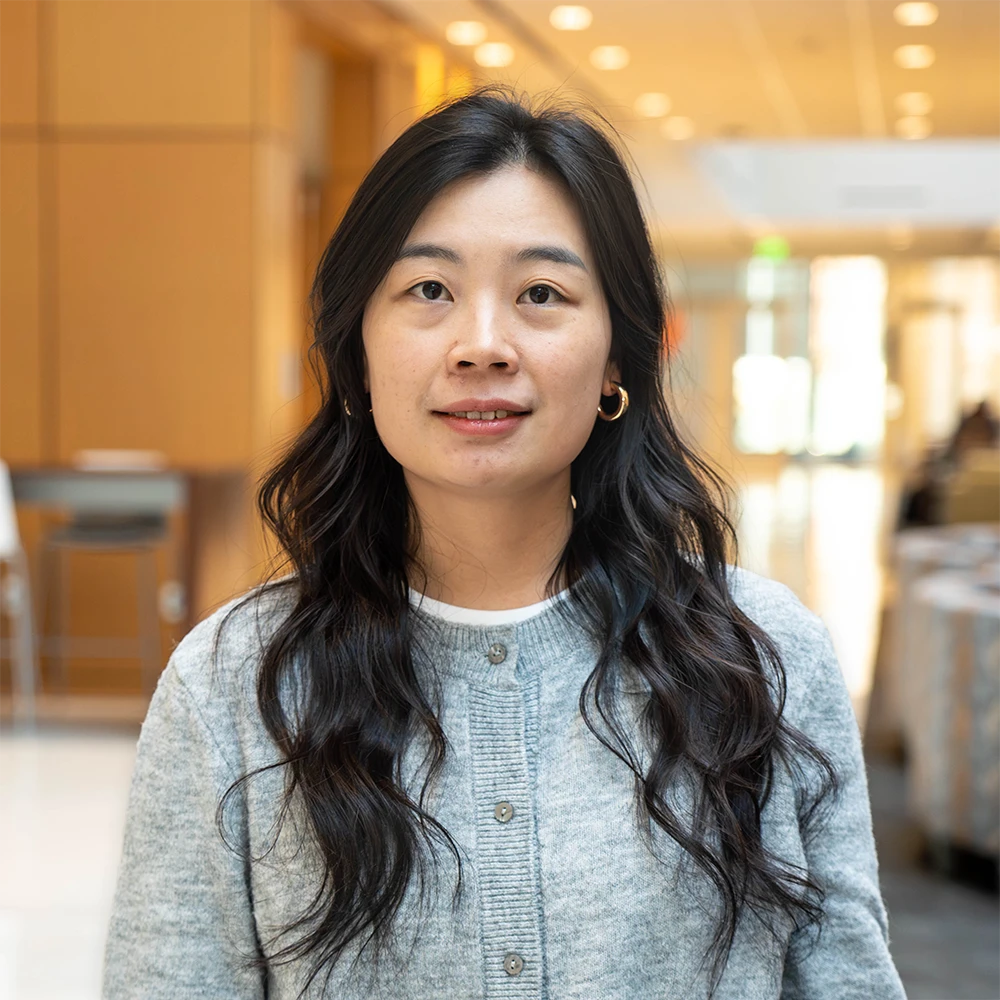
Auburn College of Education Assistant Professor Bailing Lyu explores how artificial intelligence can be designed to support students cognitively and emotionally. Her work spans both student-facing and instructor-facing applications, from teachable agents to conversational tutors that scaffold complex reasoning while offering socio-emotional support.
“My research examines how AI can foster cognitive engagement while also enhancing students’ interest, motivation and emotional experiences,” Lyu explained. Her studies investigate how interaction styles, communicative features and personality expression influence students’ learning experiences, ultimately aiming to create AI systems that are both intellectually rigorous and emotionally supportive.
Her broader research portfolio further reinforces this mission. Lyu investigates how AI can help instructors develop materials that make abstract concepts more concrete and accessible.
A balanced approach to AI-mediated learning
“Across these efforts,” she said, “a central goal of my work is to balance warm, supportive interaction and engaging content with clear and efficient information delivery, so that AI-mediated learning experiences are both cognitively effective and emotionally engaging.”
Associate Professor Ya Mo specializes in analyzing the vast streams of process data generated by digital learning environments, involving every click, pause, and problemsolving step students take online. Using advanced statistical modeling, machine learning techniques and AIdriven methods, she uncovers patterns that reveal how students think and learn in real time.
“The proliferation of digital learning environments has enabled the collection of vast streams of process data,” Mo said. “My work leverages AI to uncover patterns and generate insights that can inform educational practices.”
Her research helps educators understand not just what students know, but how they navigate complex tasks, insights that are increasingly essential as schools adopt adaptive learning systems and AI-driven assessments.
Her extended research summary further highlights this work: she examines “students’ interactions as sequences of events with precise timestamps,” using AI and machine learning to uncover trends, generate insights and evaluate the strengths and limitations of different analytical approaches. This kind of analysis is becoming indispensable as digital instructional platforms continue to expand, offering unprecedented opportunities to study learning as it happens.
A program for the next generation
Graduates of ERMA go on to become research specialists, program evaluators, institutional researchers, survey researchers and data analysts across educational and community organizations. These roles are rapidly evolving as AI becomes embedded in everything from school district dashboards to university assessment systems. ERMA’s integration of AIfocused research and analytical training ensures that its graduates are not just prepared for this shift; they’re ready to lead it.
As artificial intelligence reshapes classrooms, assessments, and instructional design, Auburn’s ERMA program stands out as a model for how universities can prepare educators and researchers for an AI-infused future.
By combining methodological rigor with cutting-edge AI research, ERMA is cultivating professionals who understand both the promise and the responsibility of using AI in education.
And in a field where data grows more complex and technology evolves by the month, Auburn’s ERMA program isn’t just keeping up with the latest developments in AI. It’s setting the pace.