

AI as an Equalizer
rtificial intelligence might sometimes be viewed as a tool for efficiency, but for students with intellectual disabilities, it can be so much more. Some might even say it’s an equalizer.
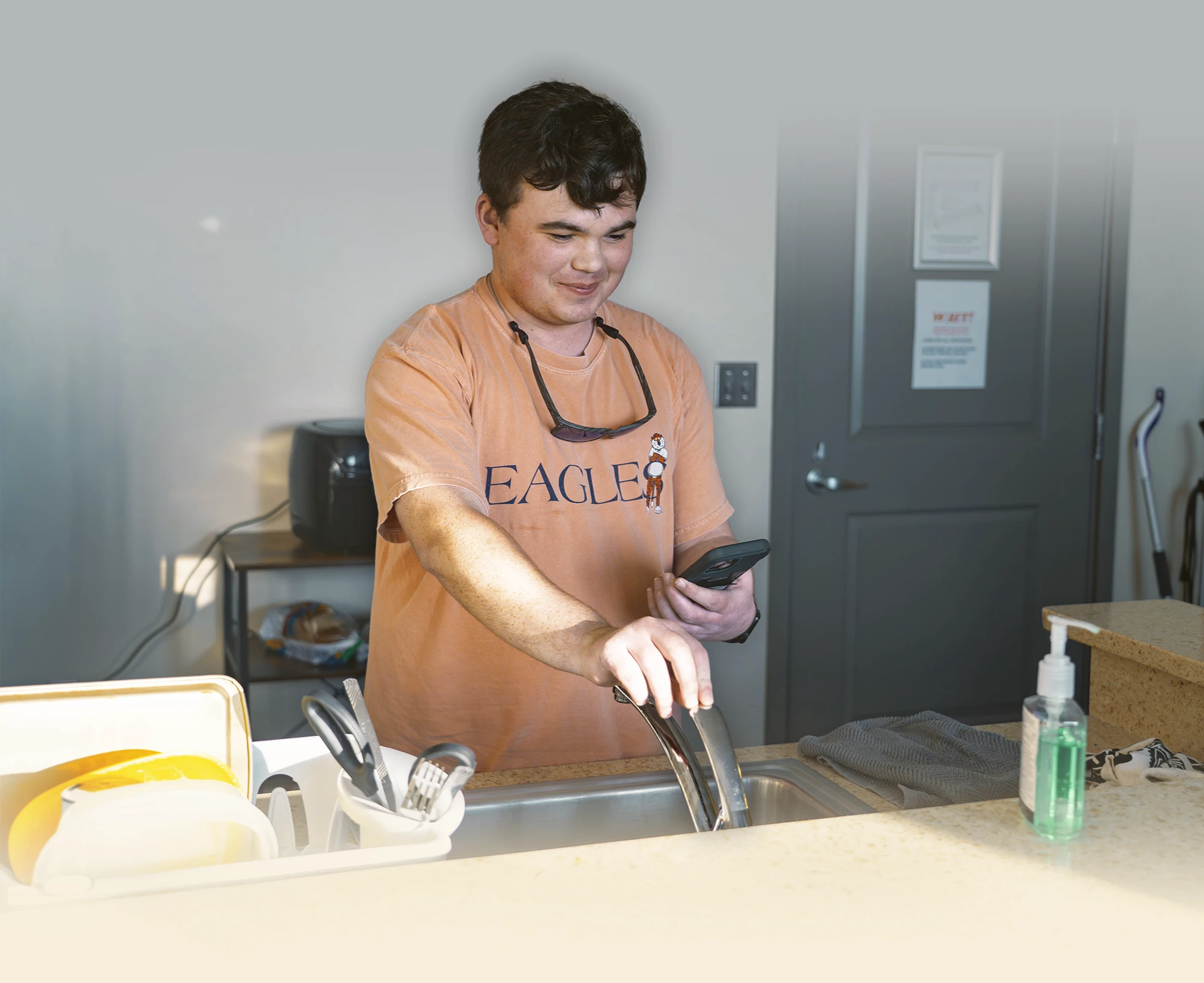
EAGLES (Education to Accomplish Growth in Life Experiences for Success) is a comprehensive transition program in Auburn’s College of Education for students with intellectual disabilities. From academics and wellness to independent living and career readiness, the EAGLES Program empowers students to thrive. As part of that effort, the program is proving that when technology is taught responsibly, it doesn’t just streamline tasks, it opens doors.
With a prestigious five-year, $2.3 million grant from the U.S. Department of Education’s Transition and Postsecondary Programs for Students with Intellectual Disabilities (TPSID) initiative, Auburn’s EAGLES Program is putting artificial intelligence front and center in its mission to empower students. As part of the grant’s funding for a new and transformative ENGAGE Project, Empowerment, Networks, Growth, Access, Guidance and Equilibrium, AI and digital literacy training will become a cornerstone of the EAGLES student experience. Developed in partnership with Auburn’s Biggio Center for the Enhancement of Teaching and Learning, these interactive modules will teach students how to:
- Navigate online spaces safely and avoid scams
- Protect digital identity and personal information
- Use AI tools for learning, communication and organization
- Set boundaries and make informed decisions in digital spaces
- Build healthy relationships and understand consent
“These modules not only teach technology use, but also promote self-advocacy, healthy relationships, online and interpersonal safety and independence,” said Christine Drew, associate professor and co-principal investigator overseeing module development along with Patten, the principal investigator of the ENGAGE Project.
Beyond Technology: A Wraparound Model
The TPSID grant, one of the nation’s most competitive federal programs supporting postsecondary education for students with intellectual disabilities, will fund a wraparound services model that supports students before, during and after their college experience. Auburn’s proposal earned a perfect score, underscoring the EAGLES Program’s reputation for excellence and impact.
ENGAGE builds on EAGLES’ mission of empowerment across five domains, academics, employment, health and wellness, personal social skills and independent living, with priorities that include:
- AI & Digital Literacy Modules: Teaching students to use technology safely, ethically and effectively to support learning and independence.
- Independent Living Expansion: Implementing a residential model with structured instruction and real-time feedback.
- Person-Centered Planning Technology: Using Equip, a digital platform for goal-setting and progress monitoring.
- Curriculum Innovation & Virtual Reality: Simulating real-world social and employment scenarios to enhance self-advocacy.
- Academic Credentials & Employment Readiness: Expanding stackable digital credentials and strengthening internship partnerships.
- Mental Health & Wellness Supports: Embedding proactive mental health services into the student experience.
- Research & Accreditation: Pursuing national accreditation and implementing a robust evaluation plan led by Everett Evaluation.
Transition, Summer Academy & Peer Mentorship: Launching a Transition Coordinator role, a summer academy, and a peer-to-peer Independent Living Student Worker Model.
A pathway to independence
For students with intellectual disabilities, the opportunities made possible by the grant, including that of AI, are boundless.
“Imagine a student who once struggled to organize assignments now using AI to plan their week,” Patten said. “Or a student who felt isolated finding new ways to connect and communicate. That’s the future we’re building.”
The initiative also reflects Auburn’s land-grant mission and commitment to innovation, a promise that every student deserves access to opportunities that prepare them for life beyond campus. By embracing AI responsibly, the EAGLES Program is ensuring that such technology empowers rather than excludes.